I just started reading Patrick Grant’s book Less, and with the very direct subtitle; Stop Buying So Much Rubbish: How Having Fewer, Better Things Can Make Us Happy. The book has captured me whole heartedly with Patrick having invited the reader in on his thoughts on community, shared sense of purpose, work, global economy, capitalism and of course on the creation and happiness of things, actual things such as clothes.
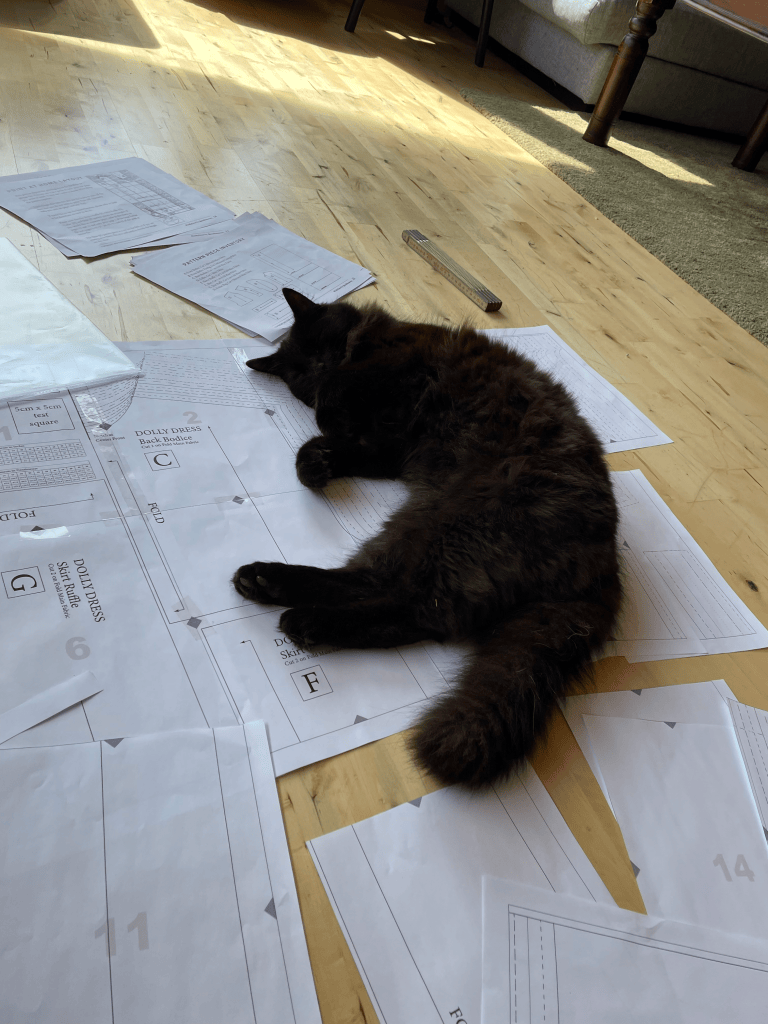
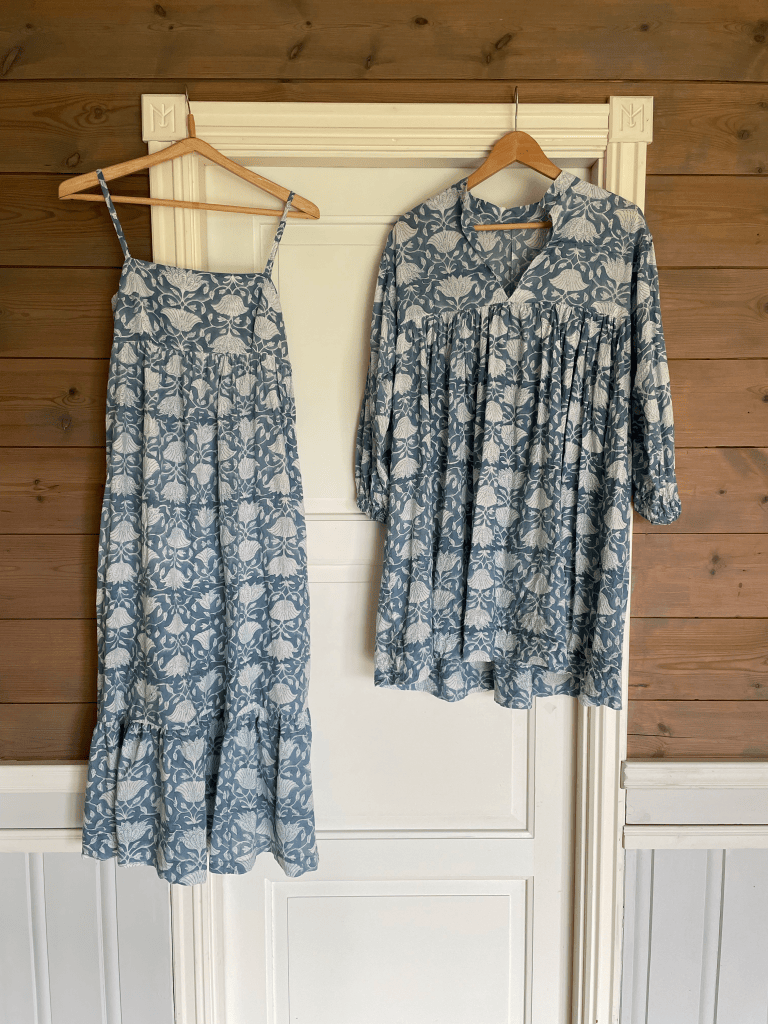
I love clothes, and not just because they’re a necessity and practical here in south west Norway where we can have all four seasons of weather in one day. No, I love clothes because of how they make me feel. The fabrics, the shapes, colours, textures, possibilities when it comes to variation and the way the clothes I wear can express something about how I feel and how I want to feel. I also love making clothes both through knitting and sewing, repairing well-worn clothes and redesigning clothes that no longer feels right but where there are elements I love.
For me a process of how I see and value my clothes started when I was a little girl. One situation made me reflect on the quality of fabrics and where the different materials originates from. Because as a little girl I had fine blond hair, and my parents insisted on keeping it rather short because I screamed so badly when it was long and they combed it. So I had a short bob, like most of the other girls in my year in the mid-nineties. This was easy in the summer and should have been easy in winter too except from that as the temperatures dropped in winter, my hair got very flowy and electric whenever I was indoors. My fine hair would be floating to all sides as my sweater got glued to my body as I took my jacket, hat, scarf and mittens off. The older I got, the more this bothered me. In the beginning is was a bit funny and there was this strange crackling sound too, but as I grew up I really started to wonder why this happened and how I could avoid it. I discovered that the reason for this was static electricity and happened as a result of the synthetic fibers in some of my clothes in combination with temperature and possibly movement. So I started to properly read the labels of my clothes and (almost) stopped wearing clothes made of plastic.
For many years now I’ve made it a habit to read clothing labels before buying clothes. What material is being used, is it oil-based such as polyester, acrylic, elastan, and so on, or is in natural fibers such as cotton, linen, wool or in theory viscose, though that’s a tale for a different time. I’ve been very strict on not buying a garment if it contains a lot of synthetic fibers, though I have some clothes that are oil based though these are inherited or have been giftet in another way.
I have a lot of clothes. I do love my clothes, most of them make me feel happy and I love how I can use clothes with their shapes, colours, fabrics and different components to express myself in this world. But I do have a lot of clothes and living in the countryside of west coast Norway with the weather changing all the time as well as many hobbies and activities, well, I guess I have thought that I need a lot of clothes too. So now I have hiking clothes, rock climbing clothes, working out indoors-clothes, work clothes for office and the physical aspects of my day job, clothes for working outdoors at home and in the garden, clothes for parties and celebrations, orienteering clothes, winter clothes, skiing clothes, free-diving clothes like swimwear and wool, and my music clothes, the onstage clothes, artist clothes. But I also have inherited clothes from my parents, grandparents and others, as well as having my London-wardrobe and clothes I’ve bought when travelling to different parts of this earth. And then there is the category which I have no idea what to do with; the clothes that have affectionate value but I don’t wear anymore and are too won out to anything with.
Writing it made me feel drained. And in December 2023 I decided that I don’t need to buy more clothes. I need to properly learn how to look after my clothes and the things I’ve already got and to redesign, sew or knit things I feel like I want or feel that I need. So this year I’ve given myself permission to buy five garments, including shoes, but no more than that. If I do I’ve made a deal with my boyfriend that I’ll pay him the same amount of money that I’ve spent in total on the clothes I’ve bought this year, and I really don’t want to do that. But only buying five garments It feels good and the things I’ve bought so far have real value to me.
I feel a bit like an addict because of the activities linked to buying clothes, like scrolling online shops for both second hand or new clothes, and to go through the process in my mind of what I actually need. Lately what’s really struck me is that the less I buy the more I feel like I have in my wardrobe already. And that’s an incredible feeling which makes me feel more content, grounded and responsible both for my own economy and for the winder view on sustainability and consumerism. So that’s a growing and good feeling that’s coming out of this year and of this process.
I love clothes and I think there are a lot of possibilities when it comes to our own wardrobes and sustainability. I highly recommend reading Patrick Grant’s book Less. It’s definitely made me think a lot.

 MUSIC & NATURE
Comment here